Streaming, made social.
Vidiyo is a social video streaming platform built on a simple bet: the best recommendation engine is the people you trust. In ten weeks I led product design from market research to a tested interactive prototype, and let the research pick the features, not the other way around.
Primary research: a 42-response survey, user interviews, and usability tests run on competing platforms.
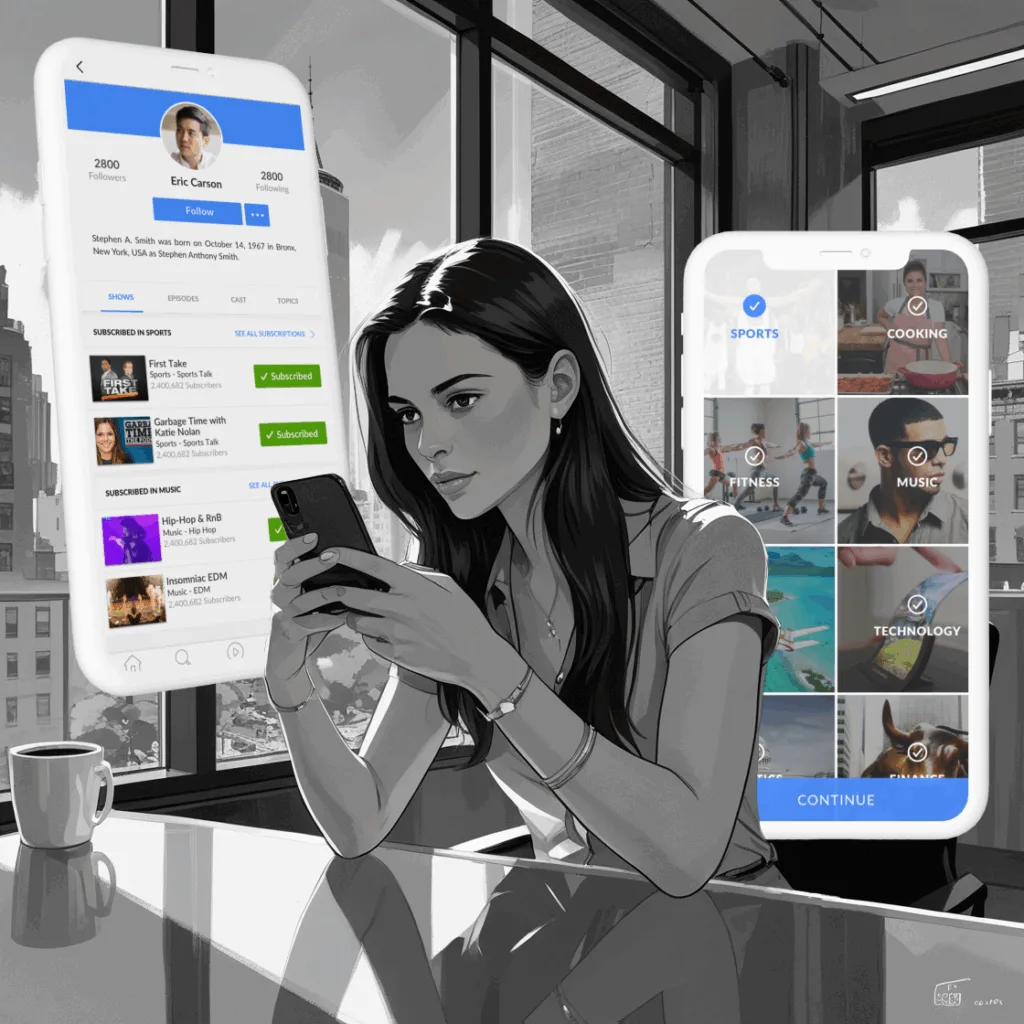
Endless content, and nothing to watch.
Streaming has a discovery problem. Catalogs keep growing, but the way people find and share what to watch hasn't kept up: dashboards are overwhelming, recommendations drift away from taste, and the sharing that actually drives viewing happens in DMs and word of mouth, invisible to every platform.
Vidiyo set out to remove the barriers to discovering and sharing content, by making the social layer part of the product instead of something that happens around it.
Every competitor had content. None had community.
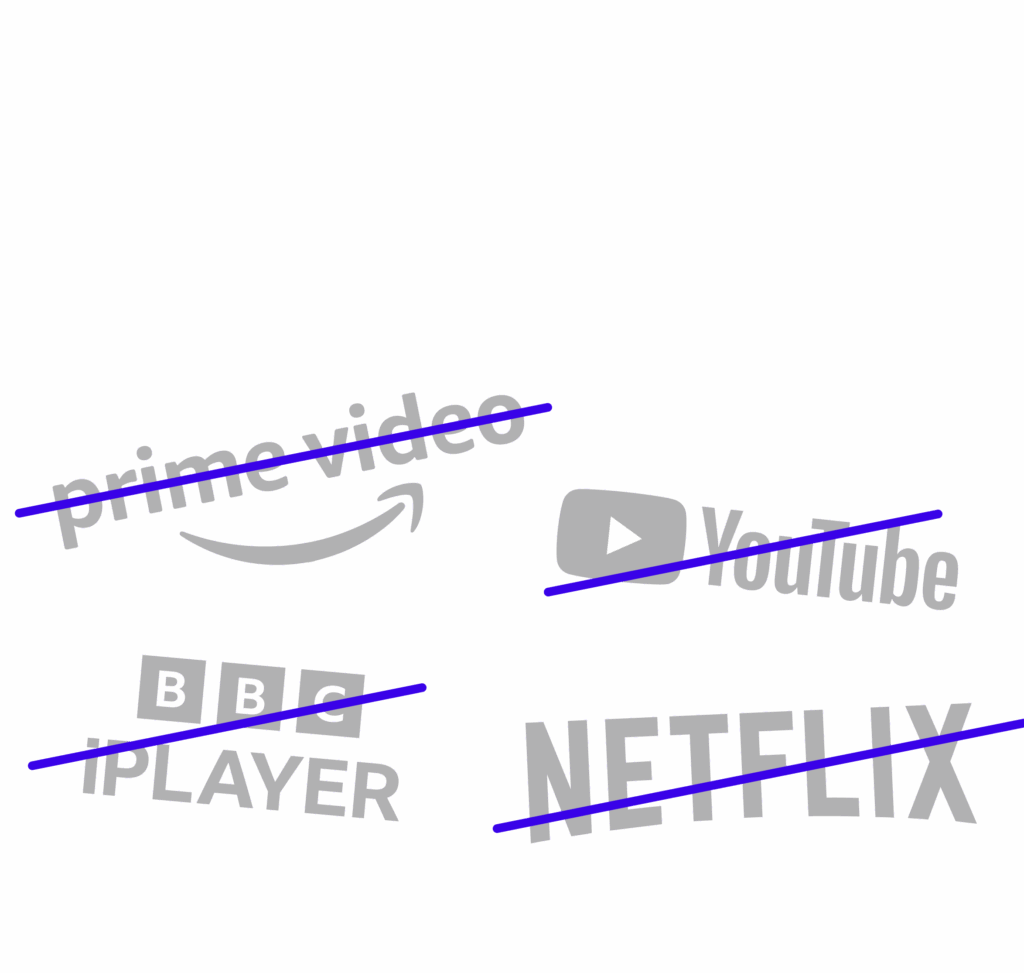
Our users already streamed with the giants: 70% on Netflix, 61% on BBC iPlayer, 44% on Amazon Prime, with YouTube rising fast on similar features. Studying them side by side exposed a consistent pattern: strong original content buried in overwhelming dashboards, with no way for users to tailor what they see.
The one exception was telling. YouTube's profiles, subscribers, and playlists, the most social features in the space, existed in none of the traditional streaming services. That gap became the design opportunity: build the features users wouldn't expect from a streaming service, but would come to rely on.
Users didn't want more content. They wanted their people.
A 42-response survey validated the target audience, 61% of streaming users aged 25 to 34, and recruited the interviewees. Interviews dug into streaming behaviors and frustrations, and usability tests on competitors' own platforms surfaced the pain points worth designing against.
Users value great content far more than endless catalogs.
Recommendations travel by DM and word of mouth, not social feeds.
Curated picks are welcome, when they come from people they know.
Less busy, more tailored, was a near-universal ask.
Streaming behaviors, values, and frustrations.
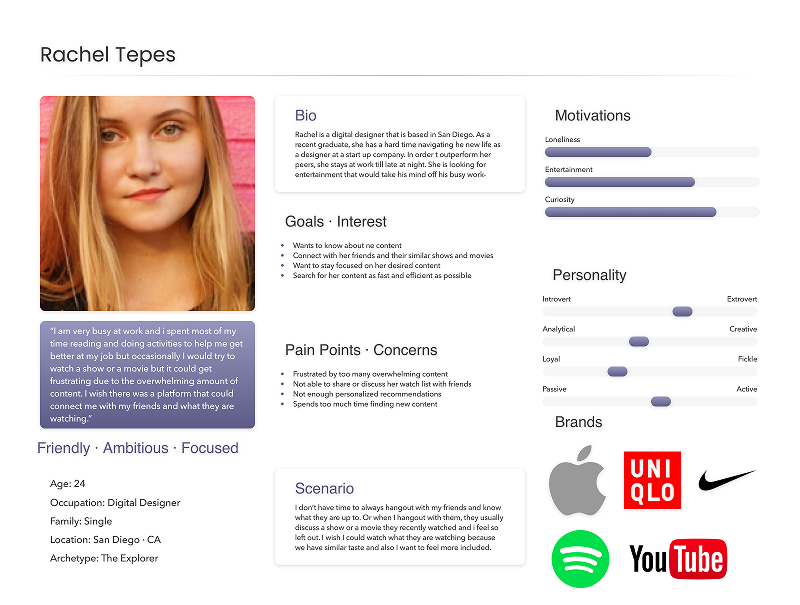
Rachel, the overwhelmed streamer. Click to view.
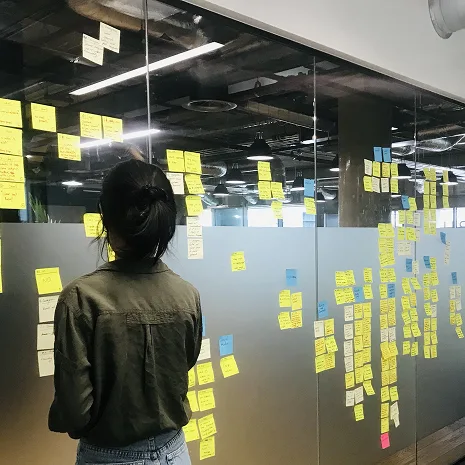
Interview signals clustered into themes.
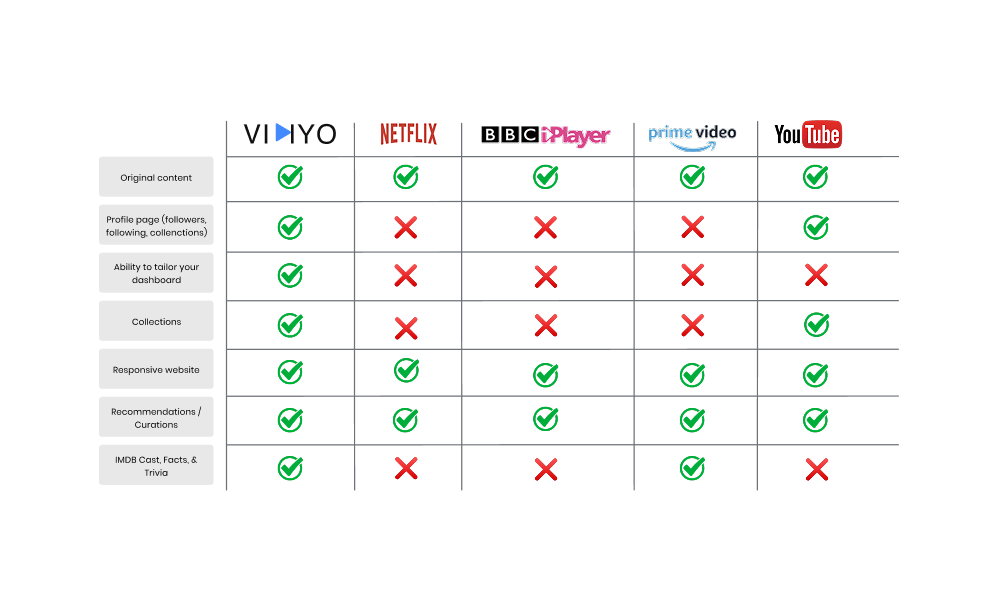
Feature-by-feature teardown. Click to view.
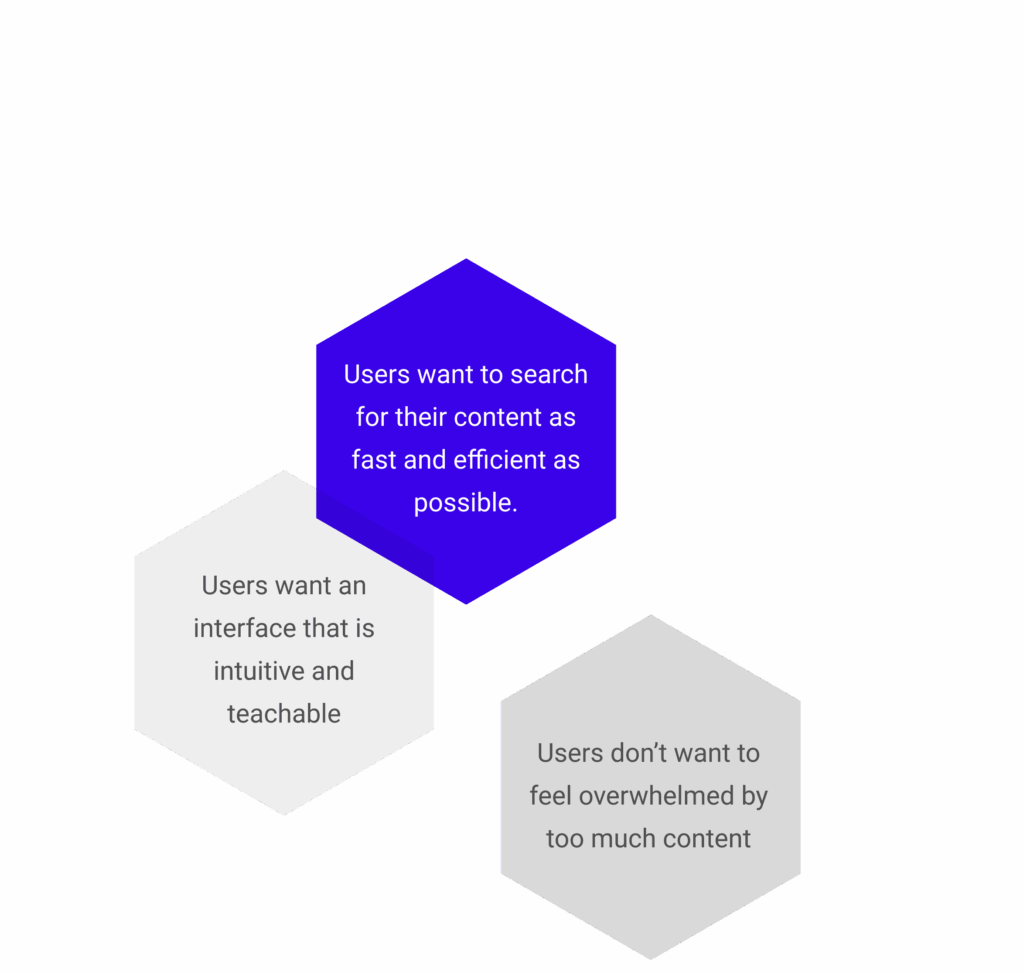
Design the features no one expects, and everyone uses.
The research condensed into two problem statements, both anchored on Rachel, the persona the interviews kept describing:
How might we help Rachel find tailored content in an overwhelming catalog, so discovery feels engaging instead of exhausting?
How might we surface her friends' suggestions, so recommendations finally match her taste and bring her back more often?
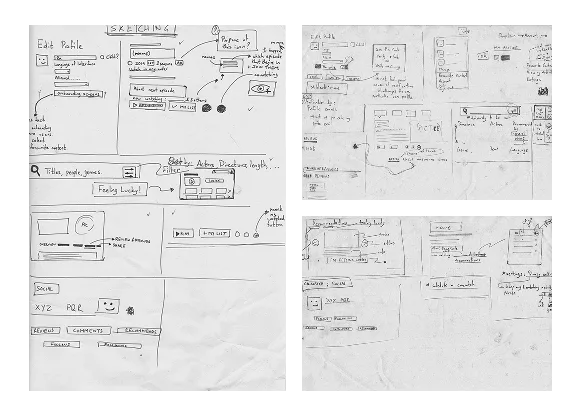
Ideation turned those statements into four features, each one filling a gap every major platform had missed:
Watch with friends virtually, together from anywhere.
Profiles and friend reviews, so taste travels inside the platform.
Find content by year, language, actor, or director.
Recs from liked content and activity, plus a randomize button.
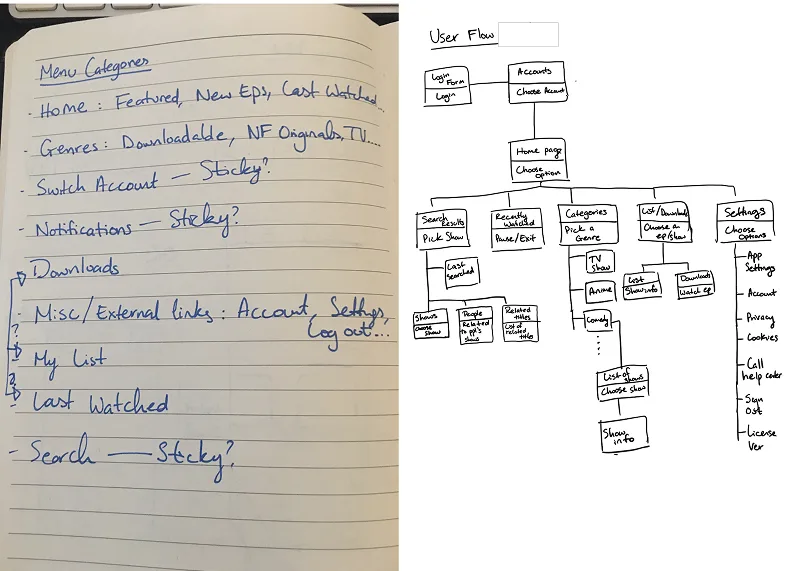
The power of community.
The finished design makes the profile the engine of the product: a community layer that gives users a reason to return that no catalog can match. People invest their time, and their money, where they belong to something, and a service that lets users build community earns growth and loyalty at the same time.

Content gets people to sign up. Community is what makes them stay.