Five products. One platform. One design language.
Thomson Reuters Elite 3E is the business platform behind the world's biggest law firms. It was assembled through acquisition, and it felt like it: five heavily relied-upon applications with five different interfaces, workflows, and logics. I was hired to lead the global design effort that made it one product, and to build the design team that kept it that way.
Market figures reported by Thomson Reuters Elite, 2017. Billing result from the published Torkin Manes customer story.
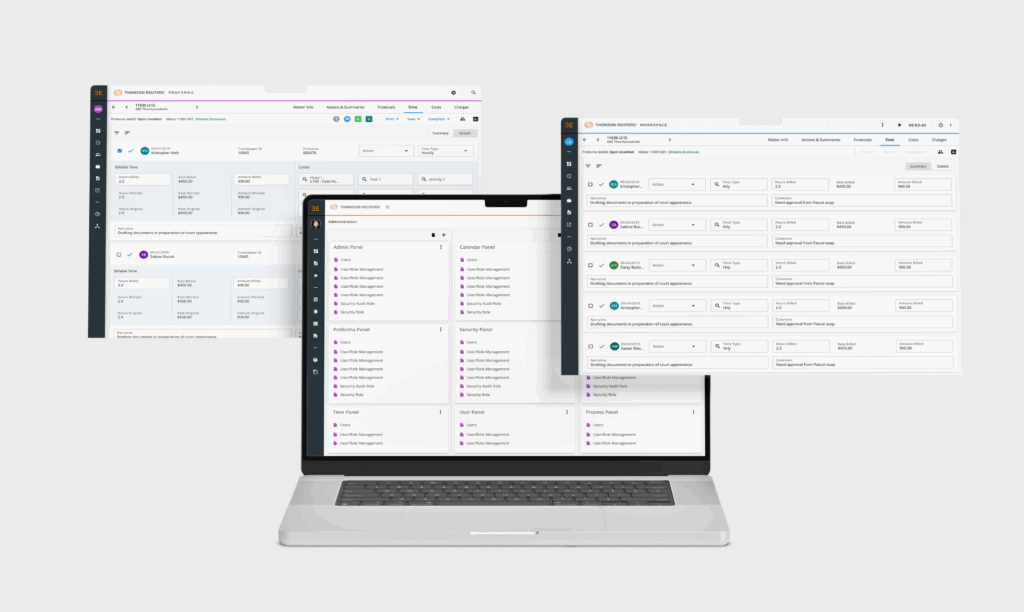
An acquisition-built platform that felt acquired.
The 3E Elite platform came together through mergers and acquisitions: several independently developed applications, each mission-critical, none designed to live beside the others. Every product had its own interface, interaction patterns, and information architecture. To the world's most demanding professional users, the suite felt stitched together, because it was.
The inconsistency created friction for users and complexity for the business. Training was slower, support was heavier, and the product experience undercut the credibility of the Thomson Reuters brand it carried.
Make it one product. Then make it stay one product.
Reporting directly to the Global Chief Product Officer, I led the design effort to bring the five applications into a single, coherent suite. The work went far beyond visual alignment: simplifying workflows, standardizing interaction models, and resolving structural differences in information architecture across products that had evolved separately for years.
The second half of the mandate was organizational. A unified platform only stays unified if there is a system, a team, and governance behind it, so I built all three: shared design standards, a globally distributed design team, and the partnership with product and engineering leadership to hold the line release after release.
A system built to outlive its designers.
The foundation was a modern, accessible design system: one visual language, one set of interaction patterns, one layout logic, applied across web and mobile. Every component was specified so a designer in any product area, in any office, would reach the same answer.
The system shipped publicly. Thomson Reuters Elite launched the refreshed interface as a unified experience across 3E, 3E Workspace, and 3E Paperless Proforma, rebuilt on modern front-end foundations, with the stated goal of one look and feel across the platform. The company's own announcement described exactly what the system was designed to do.
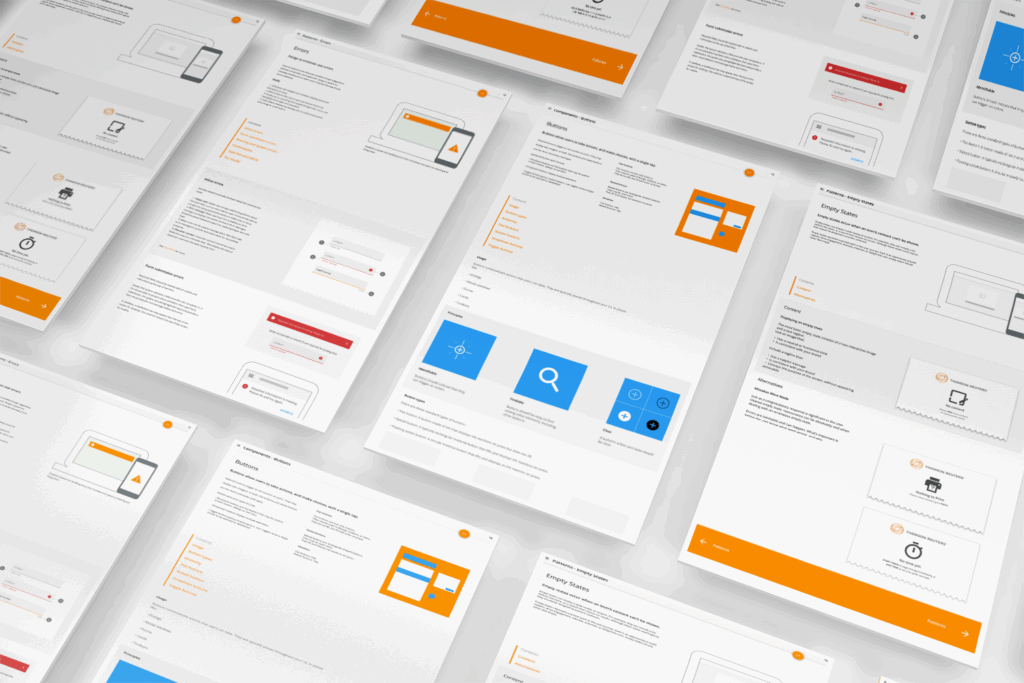
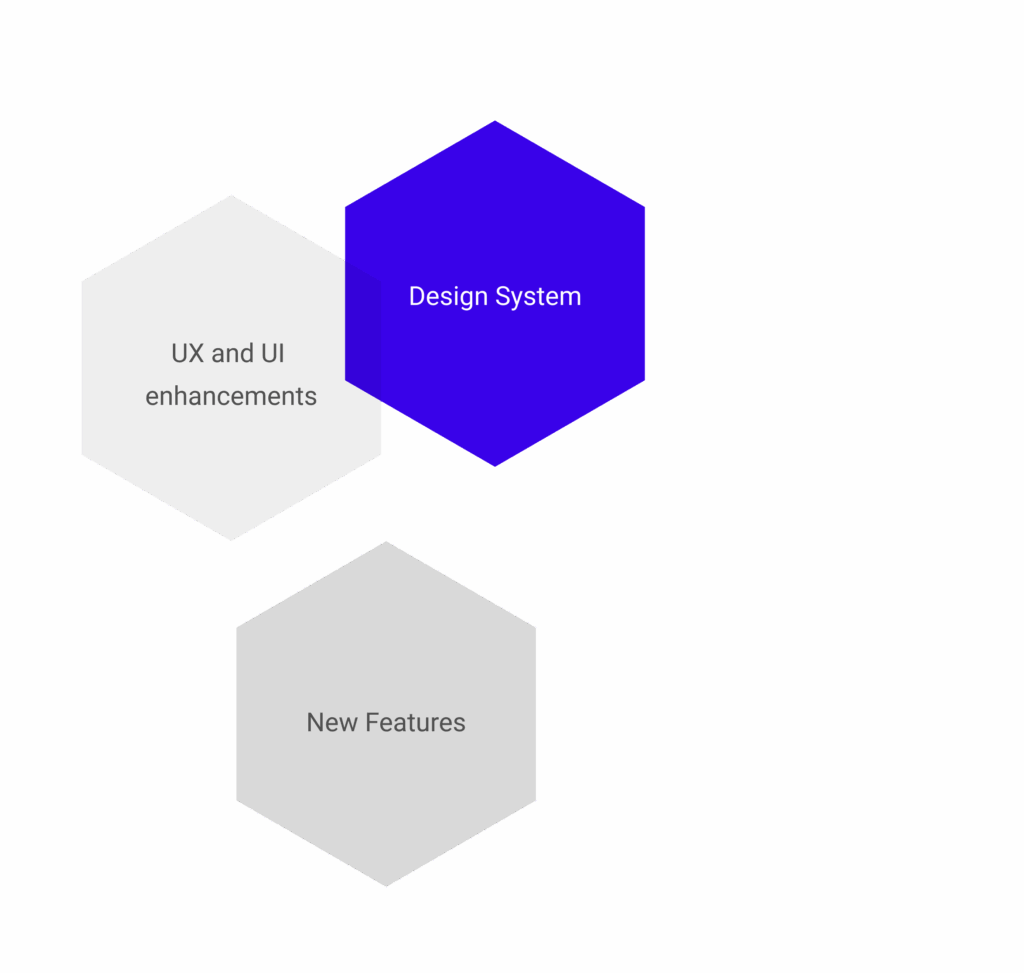
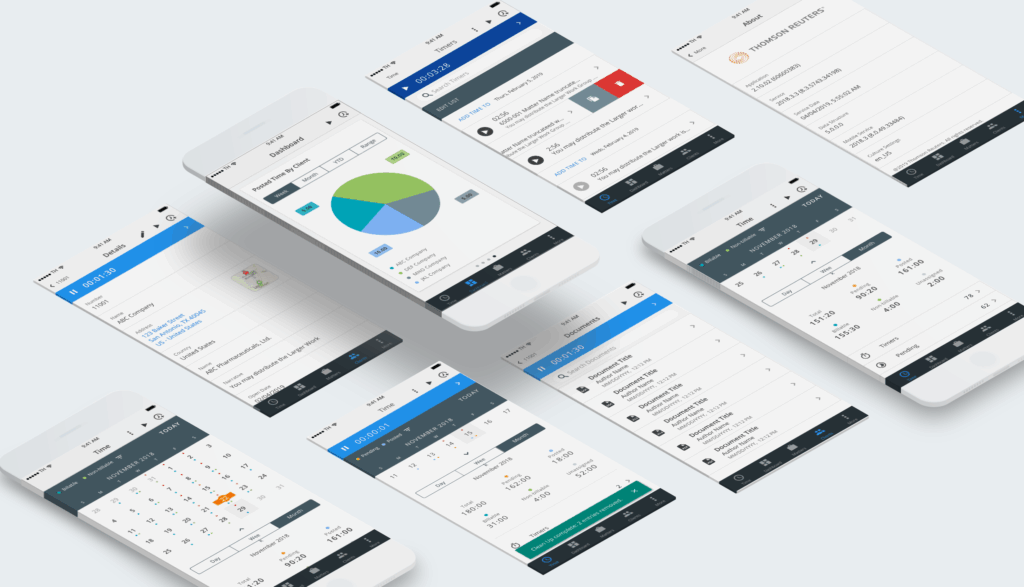
Embedded in the products. United by the system.
I organized the team so every designer was embedded in a product area, moving fast and deep inside their domain, while working from one shared system and set of principles. Governance, shared tooling, and regular cross-team alignment kept the language consistent as the platform grew, across offices and time zones.
That structure is why the system held. Consistency was not enforced by heroics or by one reviewer; it was built into how the team worked.
Firms didn't just praise the experience. They switched for it.
Law firms change practice management platforms once a decade, at enormous cost. These firms named the user experience as the reason.

“Ease of use” was cited as a major reason this top law firm switched to 3E.

Chose to leave their provider for 3E explicitly for its “intuitive billing processes.”

Chose 3E for its superior “end user experience” and “user friendliness.”

Switched for the “single, intuitive user interface and instant, easy access.”
The experience became the sales pitch.
By the time the transformation matured, the numbers told the story: at the platform's peak position, 92% of the world's 100 largest law firms and 90% of the Am Law 200 ran at least one Elite product, and 3E kept winning firms explicitly on the quality of its experience. The design system and the team structure built in these years outlived my tenure, and the unified interface it produced became the public face of the platform.
This chapter of my career is where I learned to run design at global, enterprise scale: system over heroics, governance over goodwill, and evidence over opinion. I took those lessons to iTradeNetwork, and later into building my own products.
When the experience is the reason customers switch, design has stopped being a support function. It has become the business strategy.