From outdated to award-winning.
iTradeNetwork is the digital backbone of the food supply chain in the US and Canada, moving perishable goods for the biggest names in grocery and foodservice. I joined in 2019 to build its first product design team. The platform was fragmented, customers were leaving, and no one had talked to them in years. This is the story of turning that around.
New platform vs legacy. Average of baseline UserTesting results across OMS, Order Maestro, and Freight.
“He told me he hated the product. And that I was the first person from the company to contact him in four years.”
Obsolete, fragmented, and misaligned.
The platform had grown module by module without a unified design or product strategy. Each module had its own interface, workflows, and logic. To customers it did not feel like a platform; it felt like a disconnected collection of tools, and managing complex, time-sensitive supply chains through it was a daily frustration.
But the bigger issue was not the UI. It was the distance from the customer. There were no feedback loops, no contextual research, and no visibility into how users actually worked. This was not a UX problem. It was an organizational blind spot, and it showed up in the metrics: churn climbed to 8%, NPS dropped, adoption stalled, and onboarding got slower and more expensive.
Poor user experience on an outdated tech stack with no innovation in years.
Users preferred to export their data and do their real work outside the platform.
Supplier users felt forced into OMS because their trading partners were on it.
Growing frustration with the platform drove attrition to 8%.
Get out of the building. Get in front of users.
I established the design team with a simple rule: designers own their products end to end. Each designer took an application, started with heuristic evaluations, and built their direction from user interviews, analytics, and information architecture work rather than assumptions.
Then we went where the users were. Working with the CPO and CEO, I secured a travel budget and put designers in front of dozens of clients for contextual inquiries across purchasing, accounting, logistics, sales, and analytics roles. Watching people bend the system to fit their real day rebuilt both our understanding and their trust.
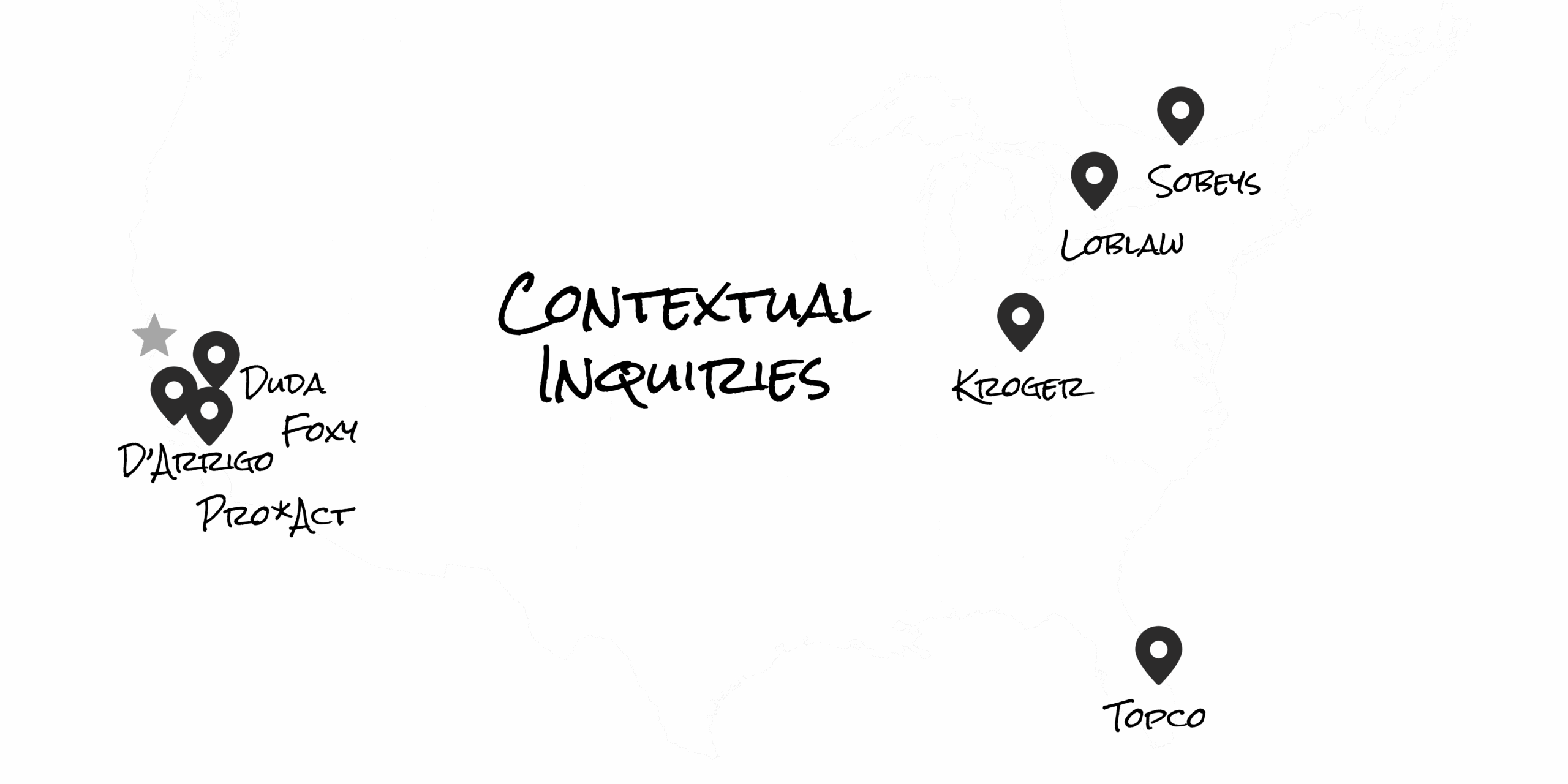

Across 6 applications, guiding decisions for each user type.
View full size →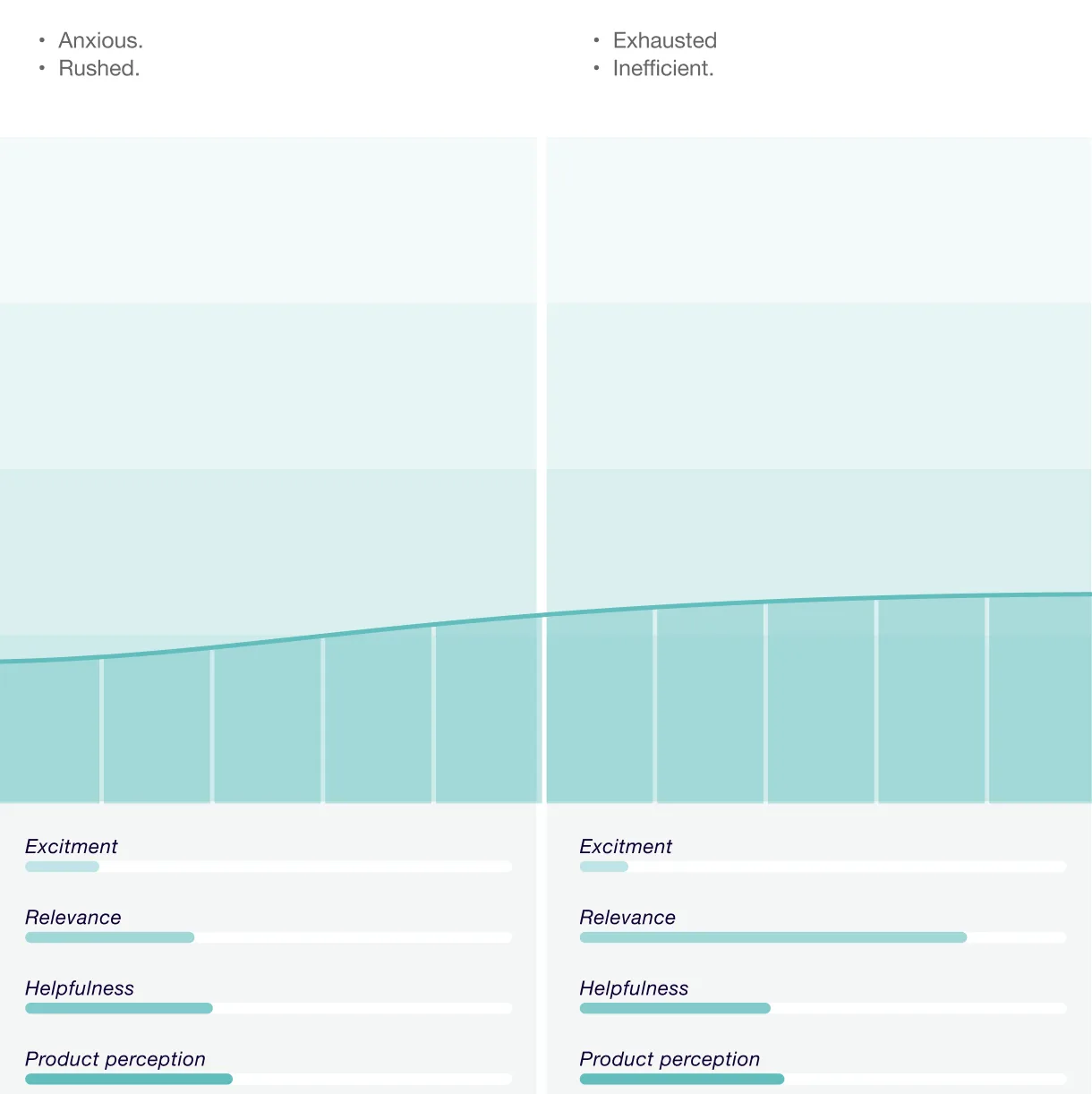
Motivations, needs, and pain points mapped to find the seams.
View full size →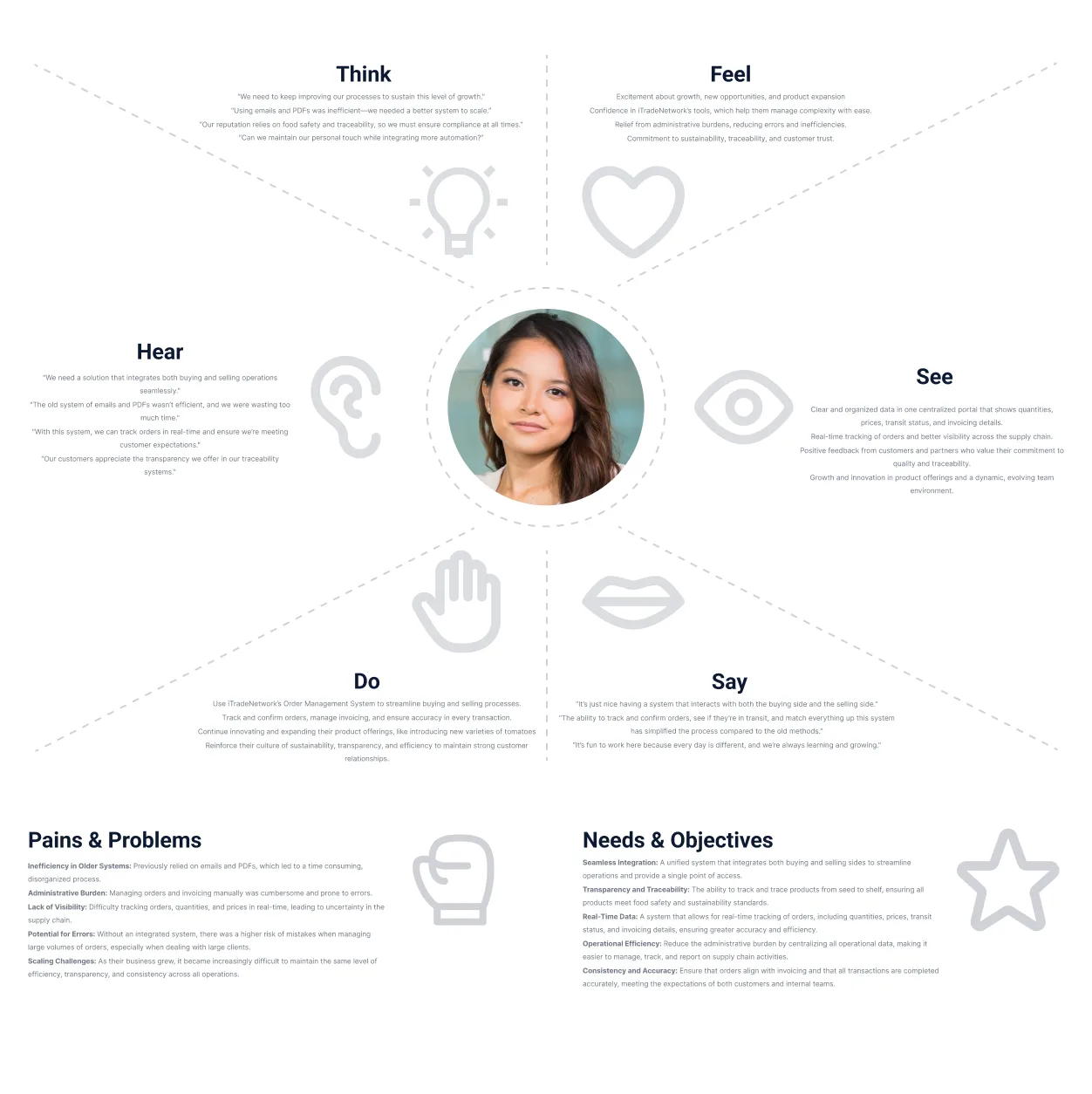
Socialized with product and engineering to replace assumptions.
View full size →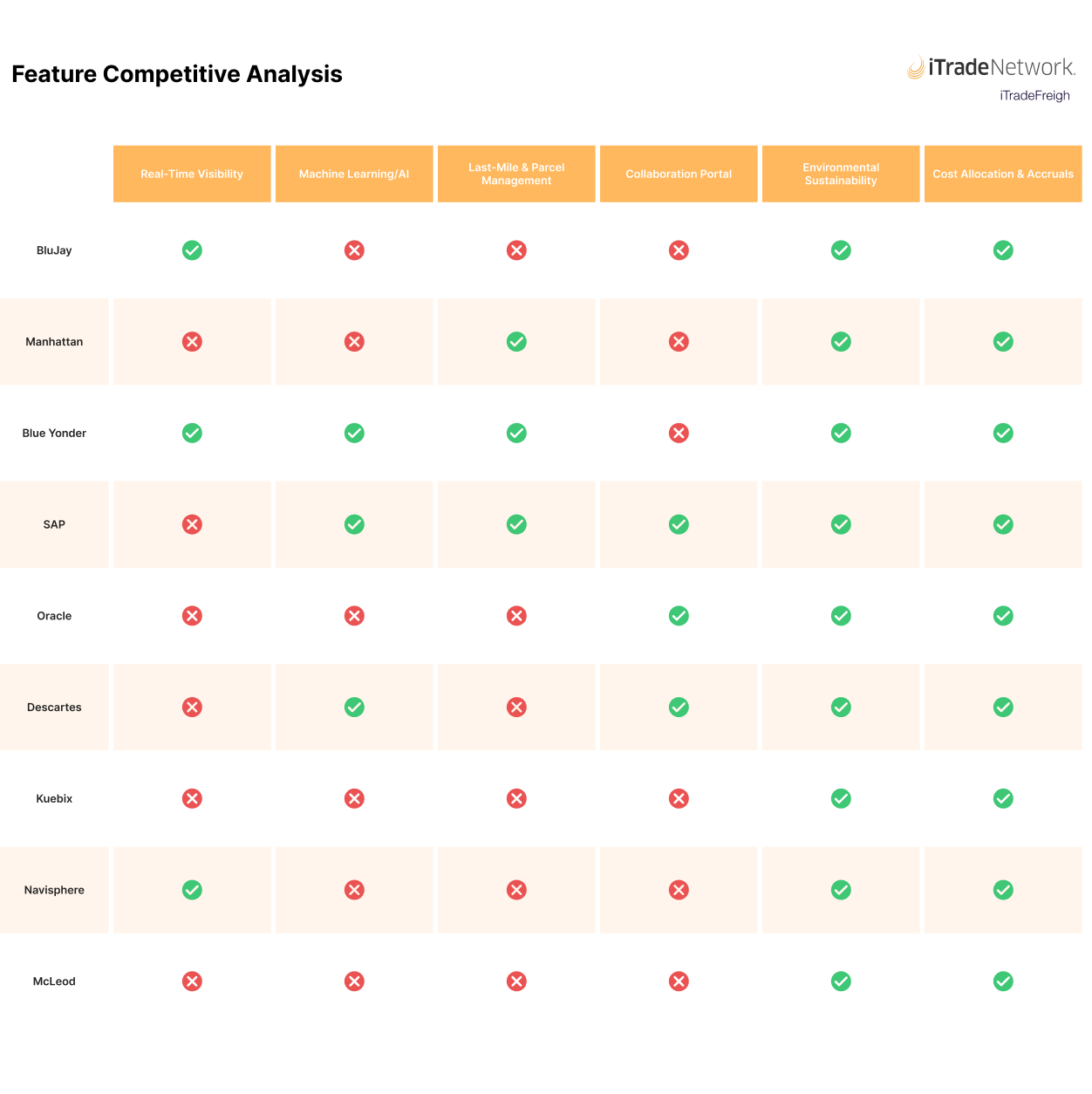
Feature-level market research per application, per designer.
A platform reinvented through the eyes of its users.
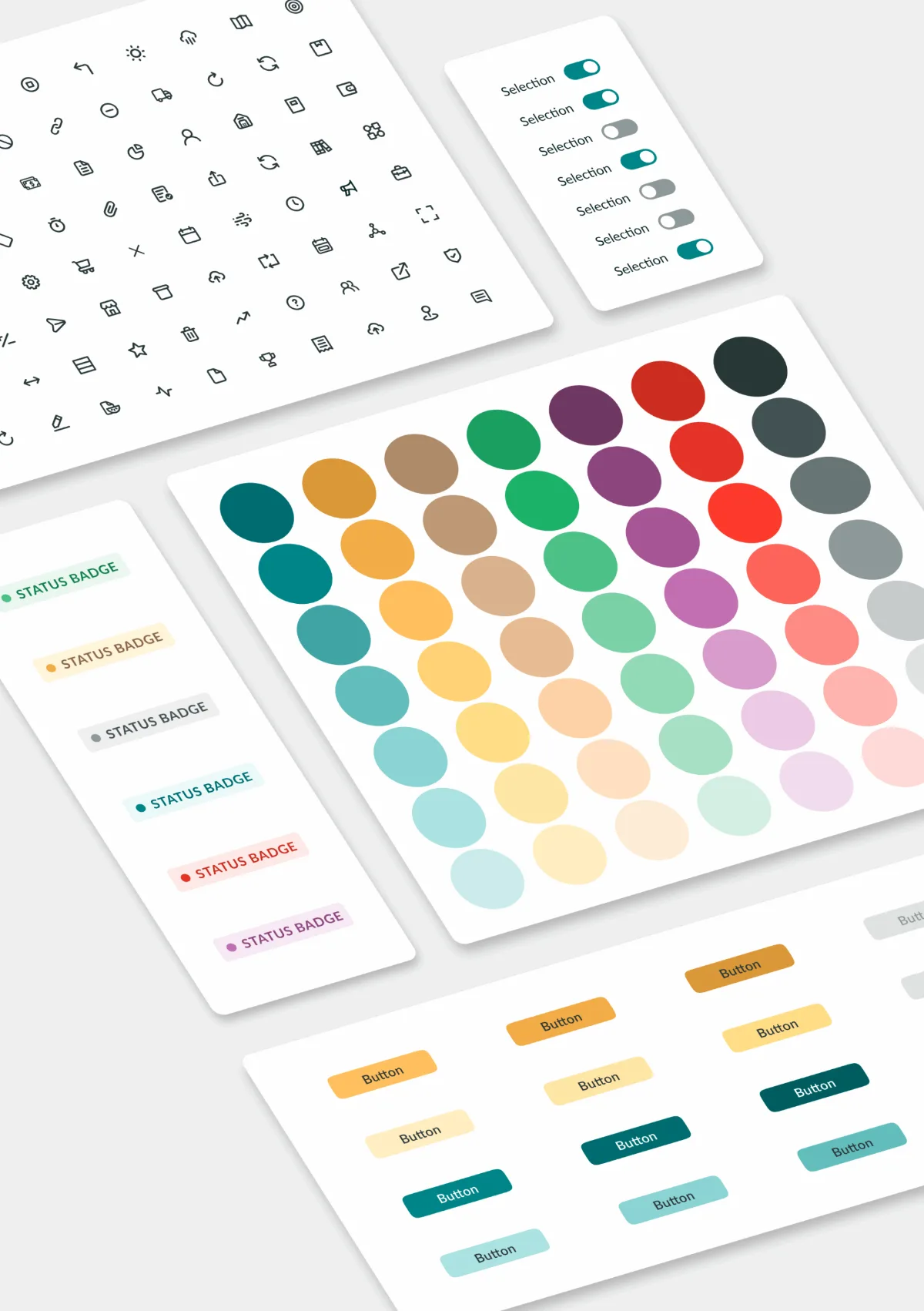
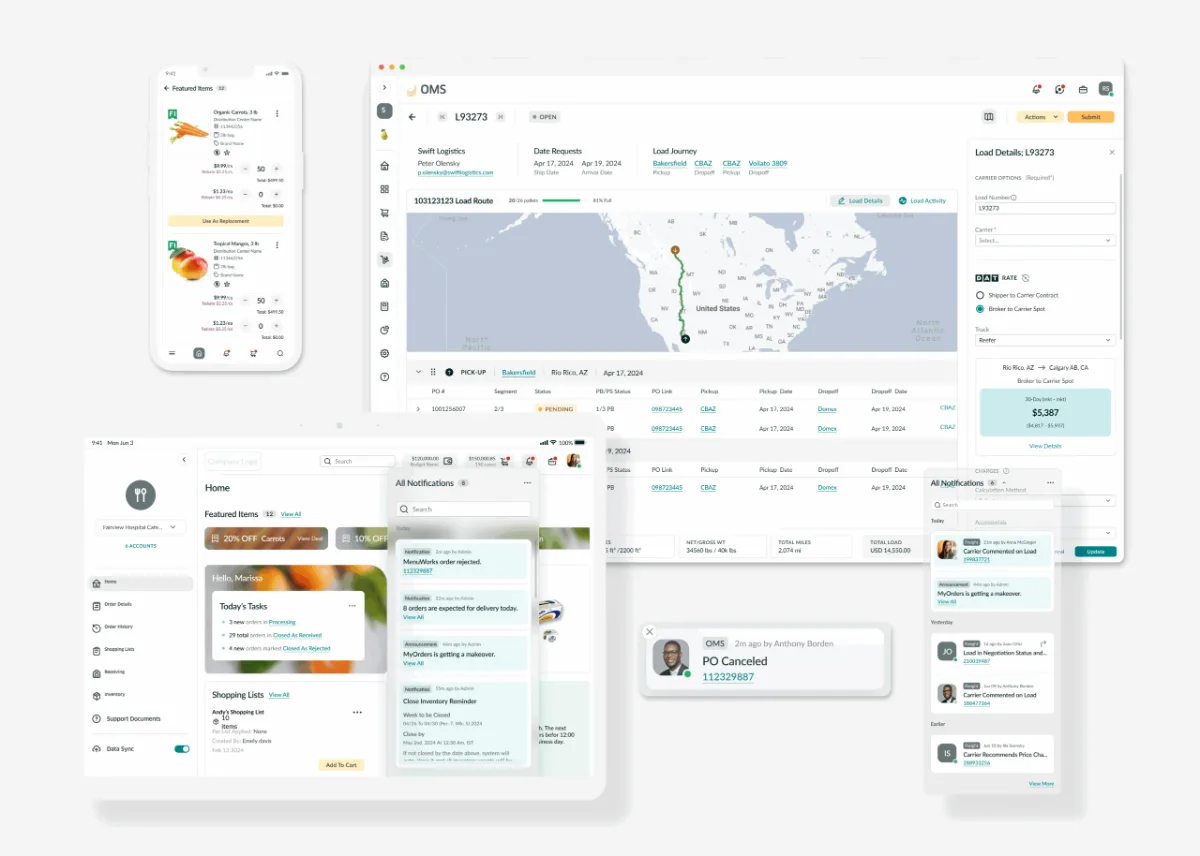
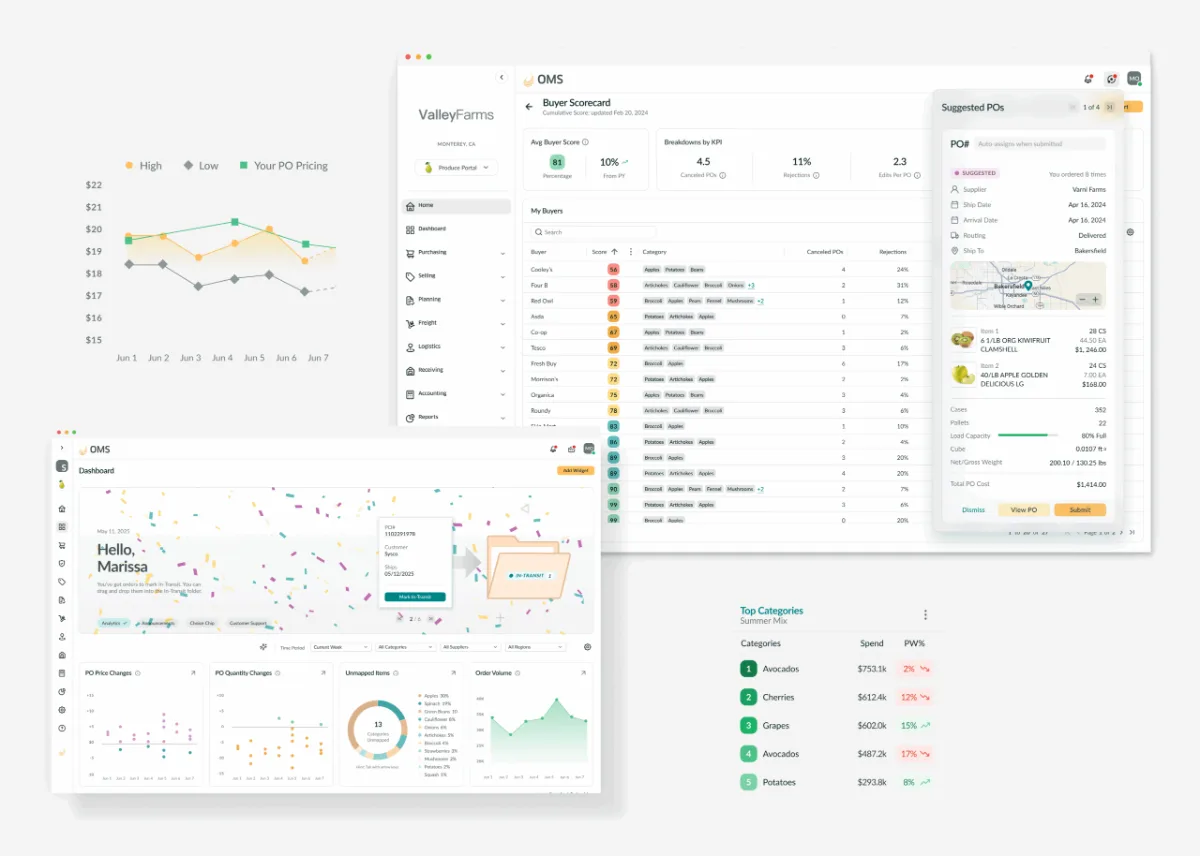
We reimagined the platform with major clients in the room, validating direction early instead of unveiling late. With marketing, we rebuilt the visual identity around the world our users actually live in: every color in the design system is named for a commodity they harvest, transport, and store, from Avocado Green to Berry Red. Not a rebrand for us; an identity aligned with them.
At the same time we pushed the platform forward technically, becoming the first supply chain SaaS company to ship automated AI-powered workflows, built where they deliver real value in our customers' day.
Ten designers. Full ownership.
As the founding design leader, I built a team where every designer owns their product end to end, from research through shipped UI.
 Kristi AllenProduct Design Lead
 Shaun RyanProduct Design Manager
 Andrew VillegasSenior Product Designer
 Christopher YangSenior Product Designer
 Isun AbdollahzadehSenior Product Designer
 Kris ShogrenSenior Product Designer
 Liberty LangProduct Designer, Research
 Ramin PartoviProduct Designer
 Vitaly SantanaProduct Designer
 Yanyi MaiProduct Designer
Watch the platform change.
Investing in benchmarked user testing let us prove the impact of every redesign, not just claim it. The numbers at the top of this page come from those benchmarks: task completion up 89%, time on task down 64%, SUS up 81% across OMS, Order Maestro, and Freight.
Great design happens far beyond Figma.
Standing up the design department was as much organizational design as product thinking. The real work happened in warehouses, back offices, and loading docks, where users bend systems to fit their day.
Designers in SaaS must operate with a business-owner mindset. Every component and pattern serves two purposes at once: user value and measurable ROI. We prioritized configuration over customization so solutions scaled across a fragmented customer base without multiplying complexity.
End-user perception changes fastest through in-person observation. Entrenched habits crumble under the right insight, but only with empathy, field time, and strategic storytelling behind it.
Designing for scale, adaptability, and business value is not a side effect. It is the strategy.